March 15, 2026
April 4, 2026 · 9 min read
Every cell in your body depends on a single molecule to produce energy, repair DNA, and regulate the biological clock that governs sleep, metabolism, and aging. That molecule is NAD+, and your body is making less of it with every passing year. If you have heard about NAD+ in the context of longevity and anti-aging research, you are not alone — it has become one of the most studied molecules in aging science. But what is NAD+, exactly? Why does it matter so much? And what can you do about it?
NAD+ stands for nicotinamide adenine dinucleotide. It is a coenzyme — a helper molecule — found in every single living cell in your body. Think of NAD+ as cellular fuel. Without it, your cells simply cannot function. NAD+ was first discovered in 1906, but it is only in the last two decades that researchers have begun to understand just how central it is to human health and aging. It is not just one of many molecules your body uses — it is arguably the most important one for keeping your cells running properly.
A simple analogy: if your cells are engines, NAD+ is the petrol. No matter how well-built the engine is, it will not run without fuel. And as you age, the fuel supply steadily shrinks.
NAD+ is involved in hundreds of biological processes, but its most critical roles fall into four categories:
Energy production. Your mitochondria — the power plants inside each cell — need NAD+ to convert the food you eat into ATP, the energy currency your body runs on. Every time you think, move, breathe, or digest food, your mitochondria are burning through NAD+ to generate the energy required. When NAD+ levels drop, energy production slows, and you feel it as fatigue, brain fog, and reduced stamina.
DNA repair. Your DNA is constantly being damaged — by sunlight, by pollution, by the normal metabolic processes happening inside your cells. A family of enzymes called PARPs acts as molecular mechanics, scanning for and repairing this damage. PARPs require NAD+ to function. When NAD+ is scarce, DNA damage accumulates faster than it can be fixed, which accelerates aging at the cellular level.
Sirtuin activation. Sirtuins are a group of seven proteins often called "longevity genes." They regulate inflammation, metabolism, stress resistance, and cellular repair. But sirtuins are completely dependent on NAD+ to do their work — without adequate NAD+, sirtuins sit idle. This is one of the key links between NAD+ decline and the visible signs of aging.
Circadian rhythm regulation. NAD+ levels naturally fluctuate over a 24-hour cycle, helping to regulate your body's internal clock. This affects sleep quality, hormone production, metabolism, and when your body is most effective at repairing itself. Declining NAD+ disrupts these rhythms, which is one reason sleep quality often deteriorates with age.
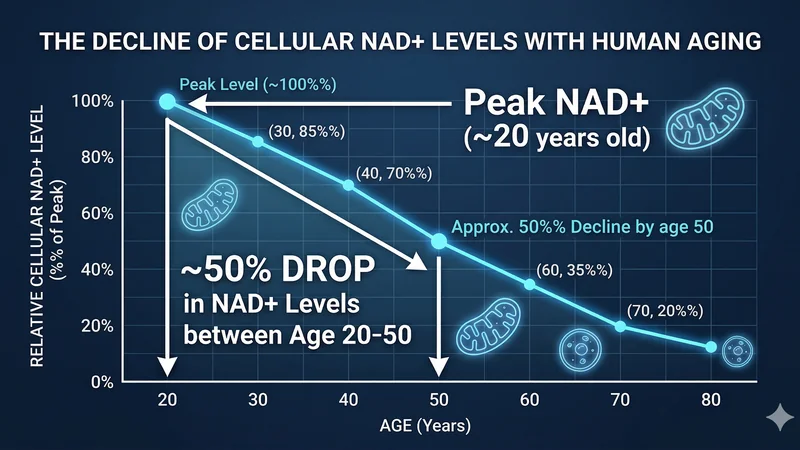
NAD+ decline is not something that only affects the elderly — it begins earlier than most people expect.
| Age Range | Estimated NAD+ Level | What You May Notice |
|---|---|---|
| 20s | 100% (peak) | Baseline — high energy, fast recovery |
| 30s | 75–85% | Subtle — slightly slower recovery, first signs of metabolic change |
| 40s | 55–70% | Noticeable — reduced energy, slower metabolism, skin changes |
| 50s | 50–60% | Significant — fatigue, cognitive fog, visible aging accelerates |
| 60s | 35–50% | Substantial — pronounced energy decline, slower healing |
| 70+ | 25–40% | Severe — cumulative impact across all systems |
Research shows that NAD+ levels drop approximately 40 to 50 percent between your twenties and age 50. The impact on skin is particularly striking: one study found that NAD+ in skin cells drops by 68 percent between ages 30 and 50. This helps explain why skin changes — reduced elasticity, slower healing, changes in texture — often become noticeable during this period.
Because NAD+ affects so many systems simultaneously, low levels can manifest in a variety of ways. Common signs include:
Exercise, especially high-intensity training. Research shows that exercise, particularly HIIT and resistance training, can stimulate NAD+ production. Regular physical activity is one of the most effective natural ways to support healthy NAD+ levels.
Intermittent fasting and calorie awareness. Studies suggest that caloric restriction and intermittent fasting can upregulate NAD+ biosynthesis pathways. The metabolic stress of fasting appears to trigger the body to produce more NAD+ as a protective response.
Quality sleep. NAD+ and your circadian rhythm are closely linked. Poor sleep disrupts NAD+ cycling, and low NAD+ disrupts sleep — creating a negative feedback loop. Prioritising 7 to 9 hours of quality sleep supports natural NAD+ regulation.
NAD+ precursor foods. Foods rich in niacin (vitamin B3) include chicken, tuna, mushrooms, and green peas. Foods containing tryptophan, such as turkey, eggs, and dairy, also contribute to NAD+ synthesis. However, dietary sources alone are unlikely to fully compensate for age-related NAD+ decline.
Stress management. Chronic stress increases NAD+ consumption through inflammation and elevated cortisol. Practices that reduce chronic stress indirectly support NAD+ preservation.
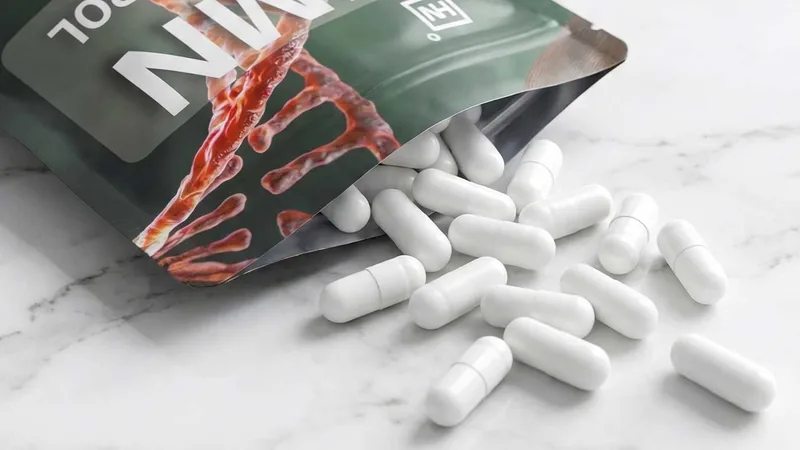
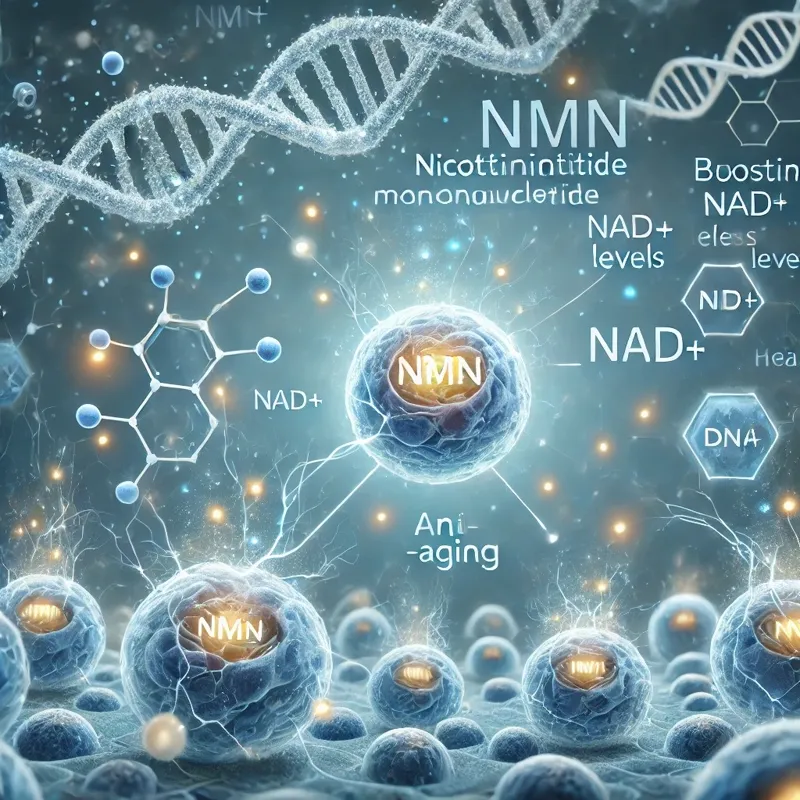
The most efficient way to boost NAD+ through supplementation is to provide a direct precursor — a molecule that sits just one step away from NAD+ in the production chain. NMN (nicotinamide mononucleotide) is exactly that. NMN converts directly to NAD+ via an enzyme called NMNAT, making it one of the most direct routes to raising NAD+ levels. For a detailed look at NMN, see our guide on what NMN is and how it works.
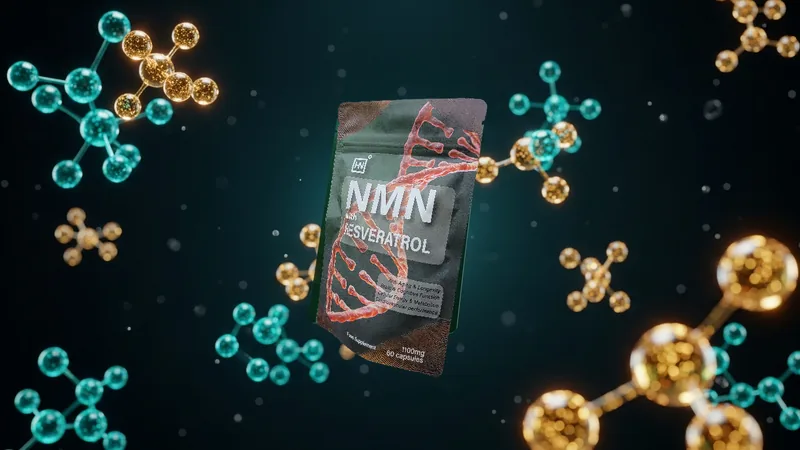
The combination of NMN with resveratrol is particularly compelling. While NMN raises the supply of NAD+, resveratrol activates the sirtuin proteins that depend on NAD+ to function. It is like filling the fuel tank and tuning the engine simultaneously — research suggests the combination produces greater NAD+ elevation than either compound alone. Our NMN + Resveratrol supplement delivers 500mg of NMN with 98% Trans-Resveratrol and BioPerine for enhanced absorption, formulated to target this synergistic pathway.
At what age should I start worrying about NAD+ decline?
NAD+ decline begins in your thirties and accelerates through your forties and fifties. Many longevity researchers suggest that proactive supplementation in your mid-thirties to early forties — before the decline becomes steep — may be the optimal window.
Can I test my NAD+ levels?
Yes. Some specialised labs offer NAD+ blood tests, though they are not yet widely available through standard GP testing in the UK. Private health testing services can provide baseline measurements.
How quickly can NMN raise NAD+ levels?
Clinical studies have shown measurable increases in blood NAD+ levels within weeks of consistent daily NMN supplementation. The full benefits unfold over three to six months of sustained use.
Is NAD+ the same as niacin or vitamin B3?
No, but they are related. Niacin is one of several precursors your body can use to make NAD+. However, the conversion from niacin to NAD+ requires multiple enzymatic steps. NMN is much closer to NAD+ in the biosynthetic pathway, requiring just one conversion step.
This article is for educational purposes and does not constitute medical advice. Consult your healthcare provider before starting any new supplement regimen.
March 15, 2026